CALCULATION
Overview
Challenge
Arc flash analysis is used to assess personnel safety risks and determine hazard levels in electrical installations.
It allows to:
- calculate incident energy
- define hazard boundaries
- determine arc current
- select appropriate PPE
What it means
An arc flash is one of the most hazardous events in electrical systems.
It can occur during switching operations, human errors, or equipment failures.
During an arc fault:
- a large amount of thermal energy is released
- intense light and pressure waves occur
- a hazardous zone is formed
This energy defines the level of risk and required protection measures.
Applications
- commissioning of new facilities
- operation of existing installations
- PPE reassessment
- personnel safety studies
Approach
The analysis is performed using a detailed digital model of the electrical system.
This allows to:
- account for time-varying short circuit currents
- consider current decay during fault clearing
- simulate protection operation in primary and backup zones
- evaluate protection coordination and selectivity
The study can be performed for:
- low-voltage systems (0.4 kV)
- medium-voltage systems (6–35 kV)
- transmission systems (110 kV and above)
Standards
The analysis is performed in accordance with:
- GOST R 71959-2025
- IEEE 1584-2018
Both methodologies provide reliable and widely accepted results.
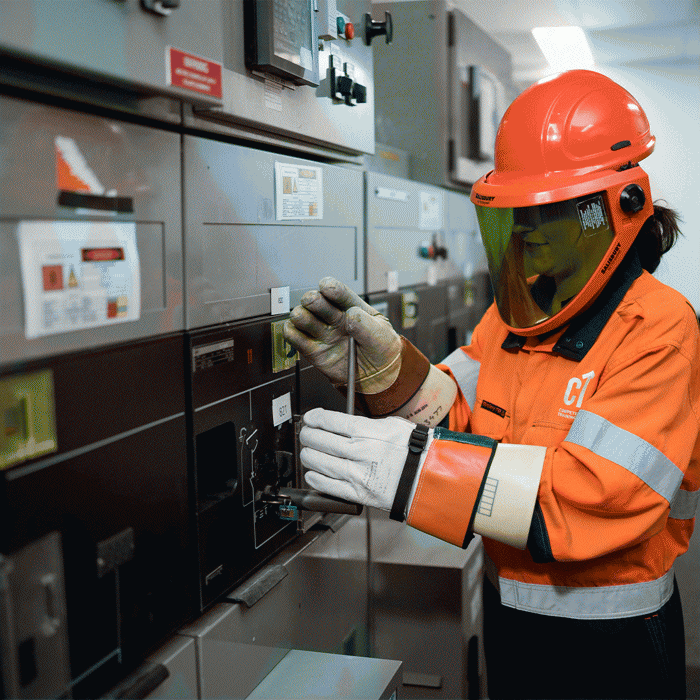
Results
The study determines:
- arc flash incident energy
- hazard boundaries
- arc fault current
- hazard level
Based on these results:
- PPE requirements are defined
- acceptable exposure levels are determined
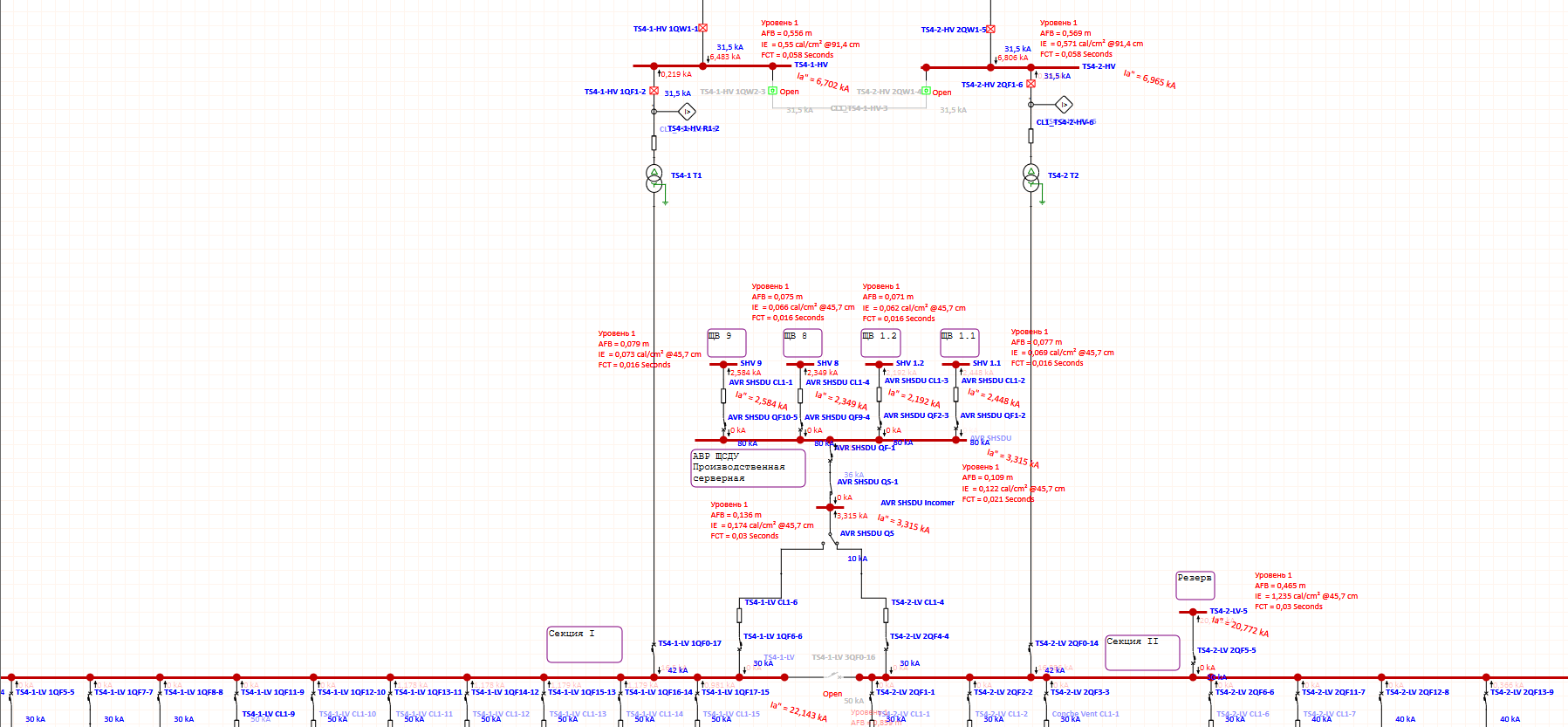
Warning labels are generated for installation on equipment, indicating arc flash energy levels.
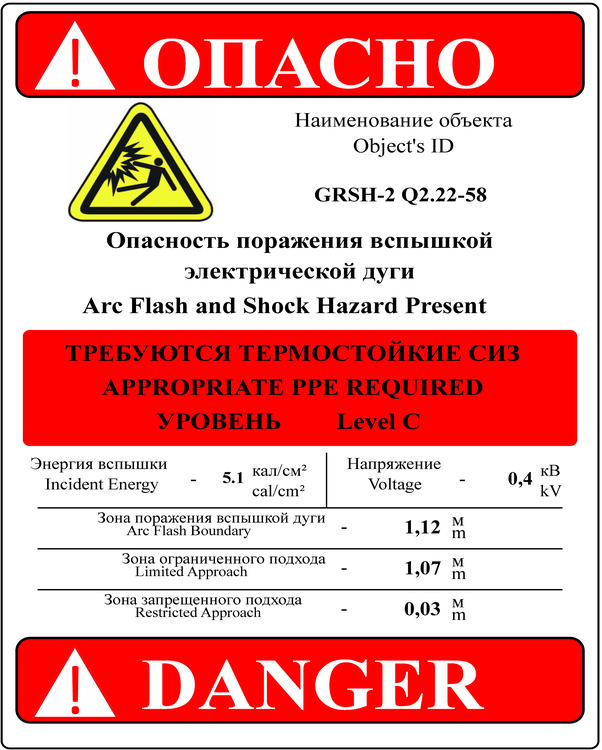
Protection Analysis
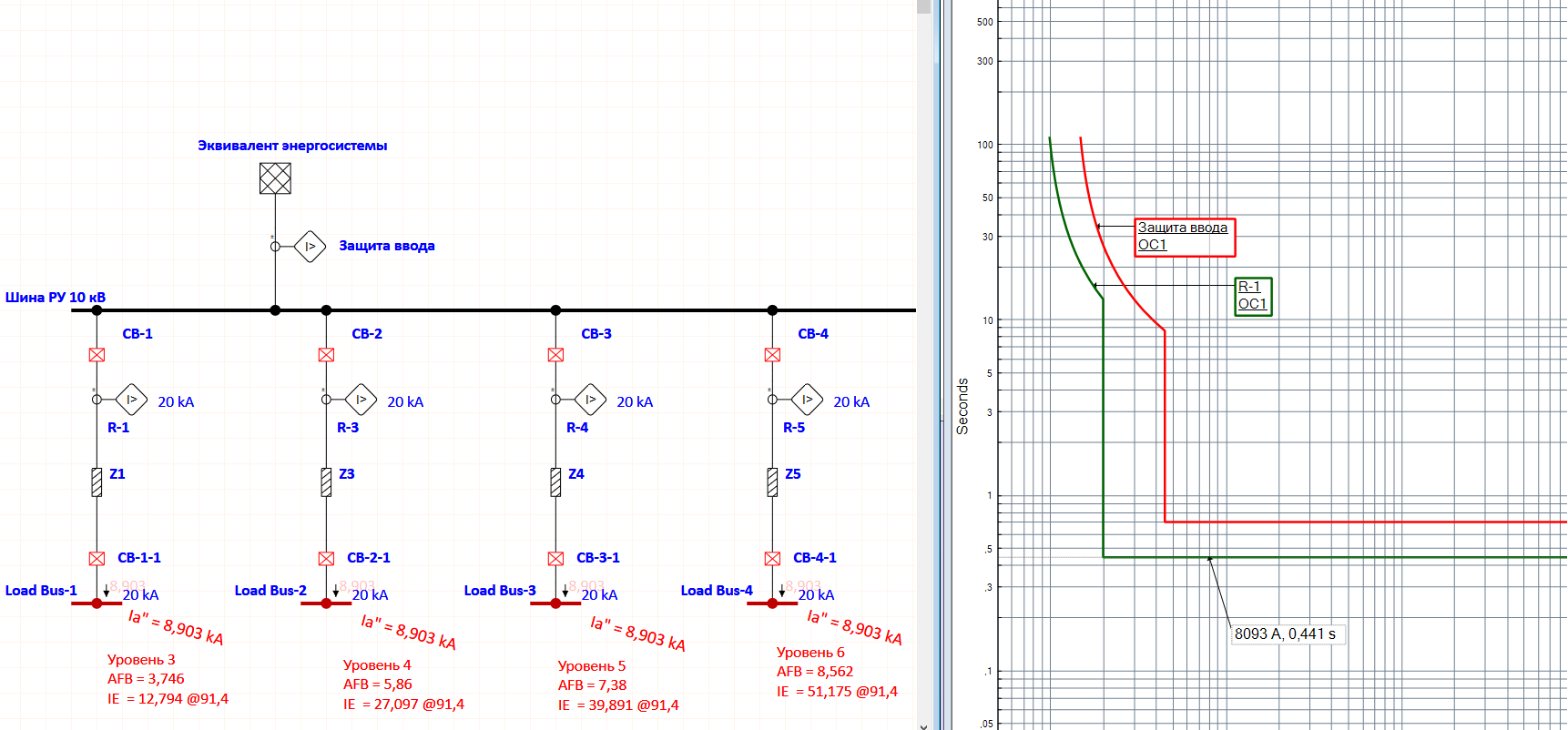
Protection system performance under arc fault conditions is additionally evaluated.
In practice:
- protection behavior differs from conventional short circuit conditions
- selectivity issues may occur
- false trips are possible
If deviations are identified:
- corrective actions are developed
- protection settings are adjusted
- clearing times are optimized
Optimization
The analysis identifies locations with high arc energy levels.
For these points:
- protection settings are optimized
- fault clearing times are reduced
- energy levels are balanced across the installation
This allows to:
- reduce PPE requirements
- improve personnel safety
- optimize operational costs
Customer Value
- improved personnel safety
- reduced risk of injuries
- correct PPE selection
- improved protection system performance
- reduced operational costs
Why it matters
Arc flash risk cannot be assessed visually.
Without proper analysis:
- actual hazard levels remain unknown
- PPE selection may be incorrect
- severe incidents remain possible
Arc flash analysis converts this risk into quantifiable values and enables effective risk management.
Input data
- Equipment dimensions
- Busbar configuration
- Single-line diagrams
- Equipment parameters
- Cable schedules
- Load data
- Short circuit currents
- Protection device types
- Protection settings
- Operating conditions
- Safety requirements
Results
- Arc flash incident energy, arc current, and hazard boundaries
- Warning labels for equipment
- PPE selection recommendations
- Protection system sensitivity verification
- Protection settings optimization
- Arc energy mitigation recommendations