SERVICE
Overview
Power system modeling is not just about calculations — it is a decision-making tool. Its main value lies in the ability to validate the system before implementation and avoid costly mistakes during design and operation.
Modeling approach
We treat the power system as an integrated model rather than a set of isolated calculations.
The model is built considering:
- network topology and equipment composition
- operating conditions (normal, maintenance, emergency)
- process-specific requirements
- interaction between all system elements
The model evolves throughout the project: it is refined, validated, and used from concept to operation.
Tools
We use professional software depending on the task:
- ETAP
- MATLAB / Simulink
- other specialized tools
Principle: the tool is selected for the task — not the other way around.
When it is applied
Modeling is especially critical:
- when designing or optimizing power supply systems
- when connecting new loads or generation
- during system upgrades and реконstructions
- for analyzing faults and abnormal conditions
- when engineering justification is required
Strengths of the approach
- System-level analysis instead of isolated calculations
- Consideration of real operating conditions, including fault scenarios
- Reduction of overdesign and “safety margin” assumptions
- Ability to compare alternative solutions
- Foundation for CAPEX and OPEX optimization
Typical tasks
- load flow analysis
- short circuit studies
- motor starting and reacceleration
- stability analysis
- power quality assessment
- protection coordination
- arc flash analysis
Positioning
We build a system model — not just perform calculations.
The result is not a set of numbers, but a tool that supports sound engineering decisions at every stage of the project.
Input data
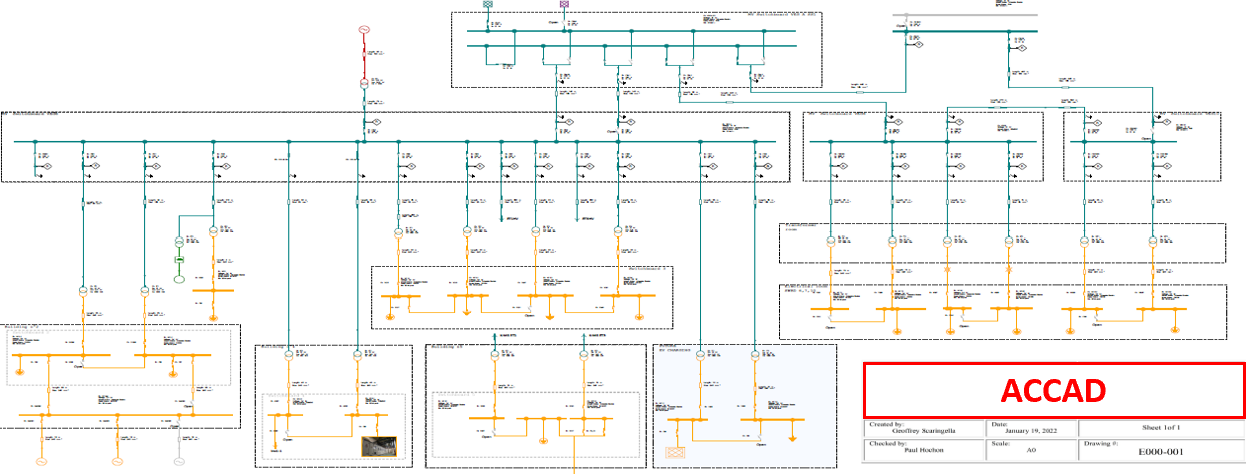
- Single-line diagrams and equipment composition
- Technical parameters of sources, lines, and loads
- Description of normal, maintenance, and emergency operating conditions
- Data on critical loads and process-specific requirements
- Operating constraints and planned change scenarios
Results
- Verified digital power system model
- Scenario-based studies with identified constraints and risks
- Analysis of normal, maintenance, and emergency operating conditions
- Validation of engineering decisions against realistic fault scenarios
- Recommendations on engineering actions and implementation priorities