CALCULATION
Overview
Challenge
Load flow analysis is used to evaluate power system performance under various configurations and load conditions.
It allows to determine:
- voltage levels at network nodes
- equipment loading
- power flows
- power losses
What it means
A steady-state condition represents a system state where voltages and currents remain constant over time for a given configuration.
In practical terms, this analysis shows how the system operates in real conditions:
- whether voltage levels are sufficient
- whether equipment is overloaded
- how power is distributed
Without this analysis, it is not possible to reliably assess system performance under normal or post-fault conditions.
Applications
- design of new power systems
- modernization of existing networks
- post-fault condition analysis
- maintenance configuration analysis
- capacity assessment
- system operation optimization
Operating Conditions Considered
- normal operating conditions (maximum and minimum load scenarios)
- post-fault conditions
- maintenance configurations
Parameters Analyzed
- voltage levels across the network
- equipment loading (generators, buses, transformers, lines)
- reactive power balance
- power losses
- deviations from acceptable limits
When the Study is Required
- during design of new facilities
- when modifying power system configuration
- when connecting new loads
- when identifying system performance issues
- during network development planning
What the Study Provides
- verification of equipment loading limits and voltage drops
- determination of required equipment parameters
- reactive power balance assessment
- identification of system bottlenecks
- reliability and maintainability analysis
- long-term planning and system development
- reduction of operational costs
Deliverables
The final report includes:
- description of input data
- tabulated calculation results
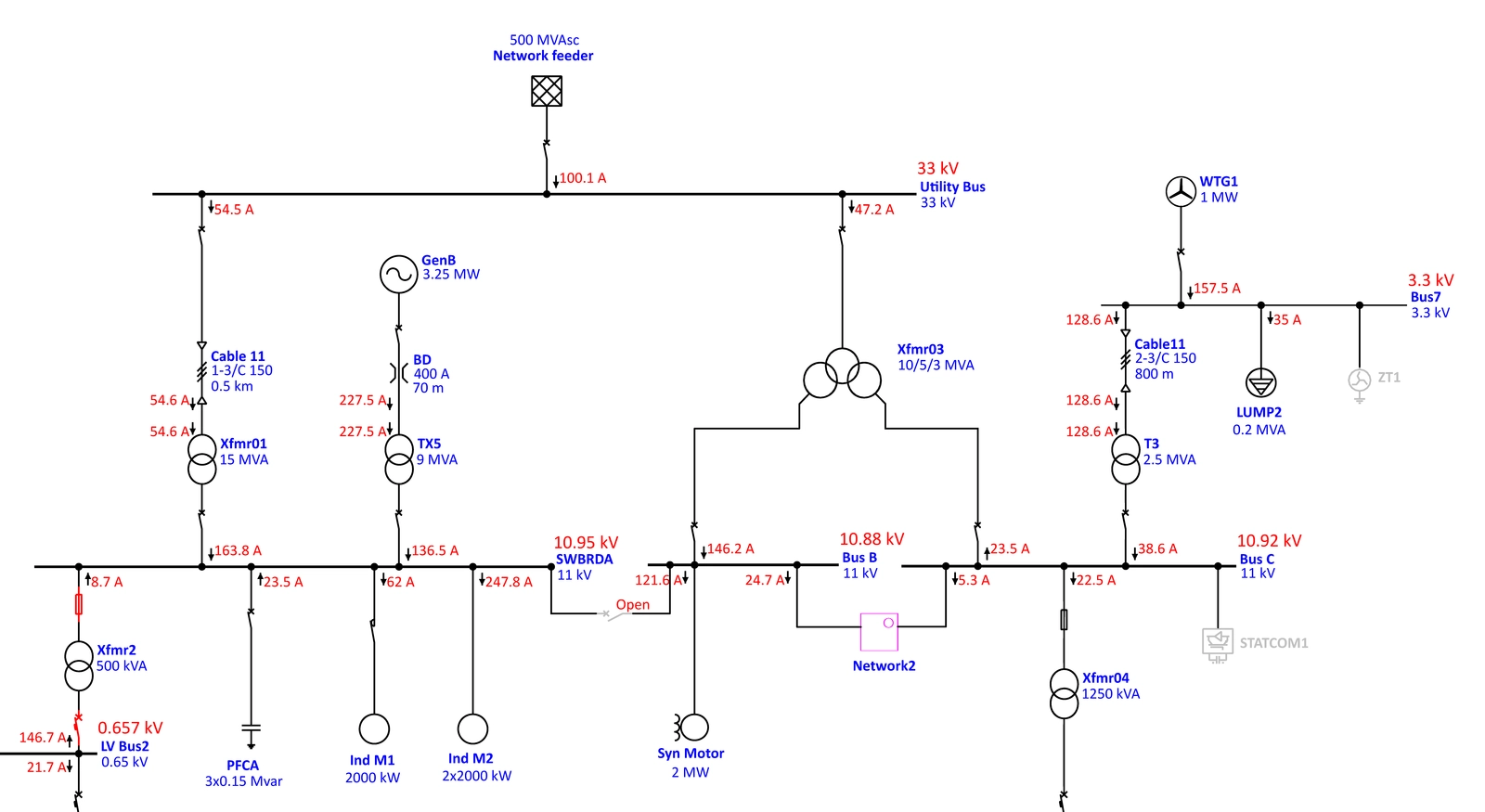
- graphical results (annotated single-line diagrams)
- conclusions and recommendations
Customer Value
- improved power system reliability
- reduced risk of overloads and failures
- optimized system operation
- justification of technical decisions
- increased operational efficiency
Why it matters
Many power system issues develop gradually:
- voltage drops
- equipment overloading
- increased losses
Load flow analysis allows these issues to be identified early and mitigated before they lead to failures or shutdowns.
Input data
- Single-line diagrams
- Generating equipment parameters
- Utility system parameters and grid connection requirements
- Transformer, cable, and overhead line parameters
- Reactive power compensation device parameters
- Current-limiting reactor parameters
- Motor parameters
- Load profiles
Results
- Identification of voltage deviations across the network
- Detection of equipment overloading (generators, buses, transformers, cables, overhead lines)
- Reactive power balance assessment
- Power loss evaluation
- Power system reliability assessment
- Recommendations for equipment selection and replacement
- Transformer tap setting recommendations (off-load / on-load tap changers)
- Reactive power compensation settings recommendations
- Definition of optimal operating configurations